
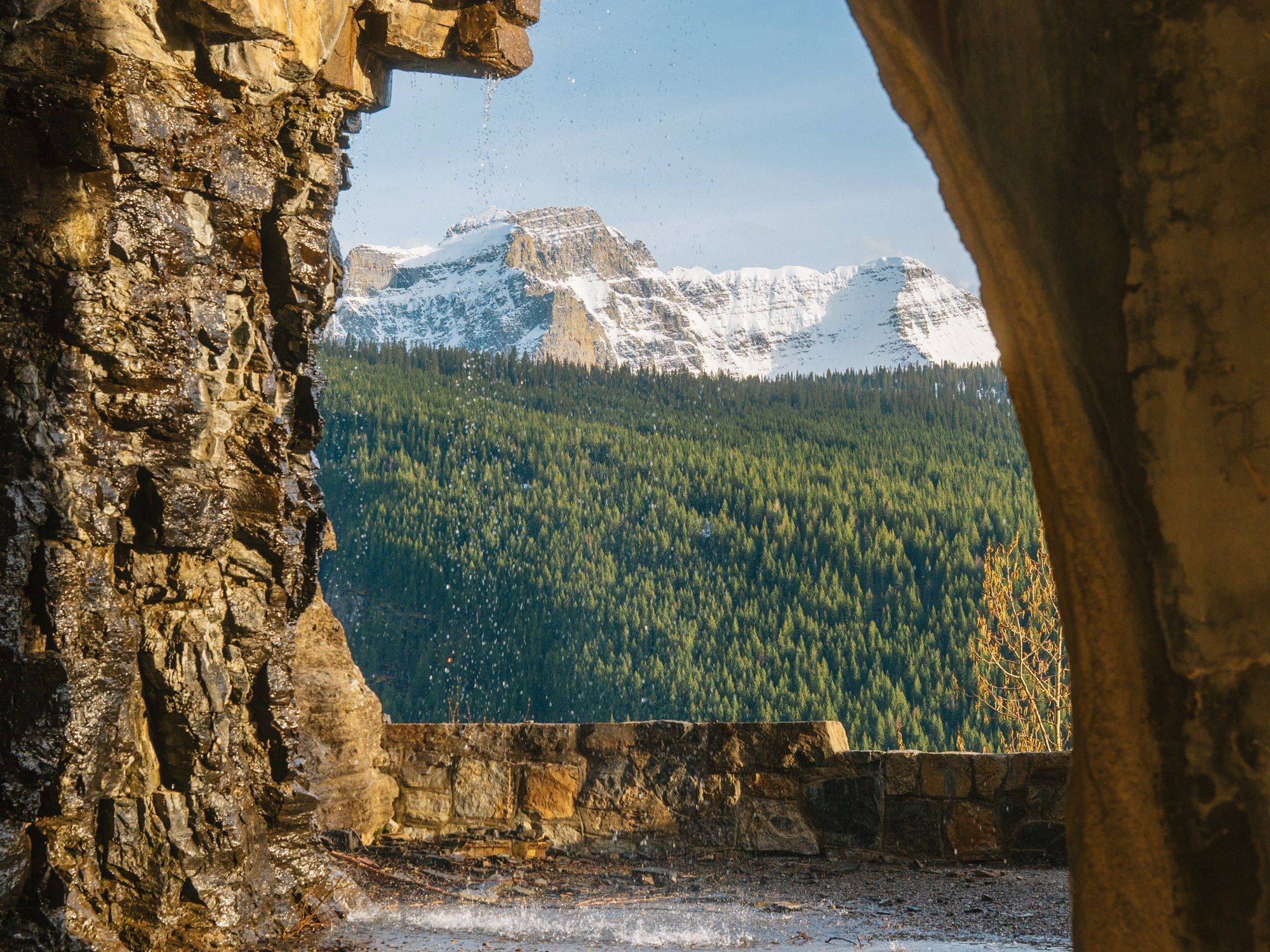
You can bike Going-to-the-Sun Road on an e-bike every spring, usually from mid-March until the road opens to cars in late June, riding from the seasonal vehicle closure as far as the park's hiker-biker closure allows that week. E-bikes are allowed in Glacier if the motor is under 750 watts and runs only while you pedal.
Updated October 22, 2026. Conditions change: check nps.gov before you ride.
Few experiences in the United States compare to riding Going-to-the-Sun Road on an e-bike during Glacier National Park’s hiker-biker season. In our opinion, and in the opinion of thousands of riders, this is the most breathtaking bike ride in the lower 48. Many even call it “the best day of their life.”
Montana E-Bikes rides this road every spring, summer and fall, and we send thousands of riders each year, so what follows is real-time insight from the road, not a travel brochure. Whether you are a first-time visitor or a seasoned rider, this guide gives you everything you need. Our Sun Road status page carries our dated reports from the road through the season.
What is hiker-biker season?
Hiker-biker season is the window each year before Going-to-the-Sun Road opens to cars, usually mid-March through late June, varying each year with snowpack and plowing progress. In the park’s words: “In Spring, portions of Going-to-the-Sun Road are open for hiking and biking, beyond the vehicle closure.” During this time:
- Riders travel from the seasonal road closure up toward the snowplows, as far as that week’s closure allows.
- You may ride 20 to 32 miles round trip, depending on the starting point and how far the park allows that week.
- Wildlife viewing is at its absolute best.
- The road is peaceful, quiet and virtually free of vehicle traffic.
This is the only time of year you can experience the Sun Road like this, which makes it a once-in-a-lifetime opportunity.
The park’s rules for e-bikes
The National Park Service sets the rules, and they are short. “Electric bicycles (e-bikes) are allowed if the motor is less than 750 watts (1 hp) and engaged only while pedaling.” “Bicycles are allowed only on paved roads, unpaved roads, and multi-use paths (bike paths), unless otherwise posted,” and never on hiking trails or in the backcountry. “A fee is charged when entering the park via bicycle.” Every rental e-bike in our fleet rides inside these rules. Read more on whether e-bikes are allowed in Glacier.
Spring closures move: “During Spring Hiker/Biker Season, road crew closures are in place Monday through Thursday during plowing. Visitors may advance to the Avalanche Hazard Closure when road crews are not working. Avalanche Hazard Closures are in place at all times. Progressive closure locations are determined weekly on Thursdays.” Never ride past a hiker-biker closure: the park warns of fines up to $5,000. The current closure is always on the park’s road status page.
Once the road opens fully to cars, and through September 27, bikes are kept off the Apgar to Logan Pass section at the busiest hours: “bicycles are prohibited from Apgar to Logan Pass going eastbound between 12 pm and 6 pm” and “from Logan Pass to Apgar going westbound between 3 pm and 6 pm.” Our honest take once the cars arrive: the road is narrow with very little shoulder, and we do not recommend e-biking it in summer traffic. We will be right back out there with you the next spring.
Why this ride is so special
People travel from all over the world to ride Going-to-the-Sun Road, and once you experience it you will understand why. Riding this route without cars is completely different from visiting in summer. Instead of traffic, noise and limited viewpoints, you get a road that is silent, wild and absolutely breathtaking.
During hiker-biker season the entire mountainscape opens up just for cyclists. You get 360-degree alpine views, waterfalls echoing through the canyons, cool mountain air, and you stop whenever you want without worrying about pullouts or parking. Riders frequently see alpine views usually hidden by summer traffic, waterfalls and cliffs up close, black bears and grizzlies, deer, bighorn sheep and mountain goats. We know people who have seen five major species in one ride.
Starting points
Your starting location depends on where the National Park Service places the road closure. Typically:
- Lake McDonald Lodge (mile 11): a flat warm-up before the climb begins.
- Avalanche Trailhead (mile 16): climbing begins almost immediately after Avalanche Creek.
The park’s own distances from the Lake McDonald Lodge closure: Avalanche Creek 5.5 miles (219 feet of climbing), the West Tunnel 12.7 miles (1,030 feet), the Loop 13.3 miles (1,100 feet), Big Bend 18 miles (2,545 feet), Logan Pass 21 miles (3,427 feet). From the Avalanche Creek closure: the West Tunnel 7.2 miles, the Loop 7.8 miles, Big Bend 12.5 miles, Logan Pass 15.5 miles (3,208 feet). The park notes that in 2026 no shuttles run for hiker-biker season, so you ride from where you park.
Key mile markers
- Mile 11: Lake McDonald Lodge
- Mile 12: McDonald Falls, McDonald Creek
- Mile 16: Avalanche Trailhead and Trail of the Cedars
- Mile 17: Red Rock Point
- Mile 23: West Side Tunnel
- Mile 24: The Loop
- Mile 28: Haystack Falls
- Mile 29: Weeping Wall
- Mile 29: Big Bend
- Mile 31: Triple Arches
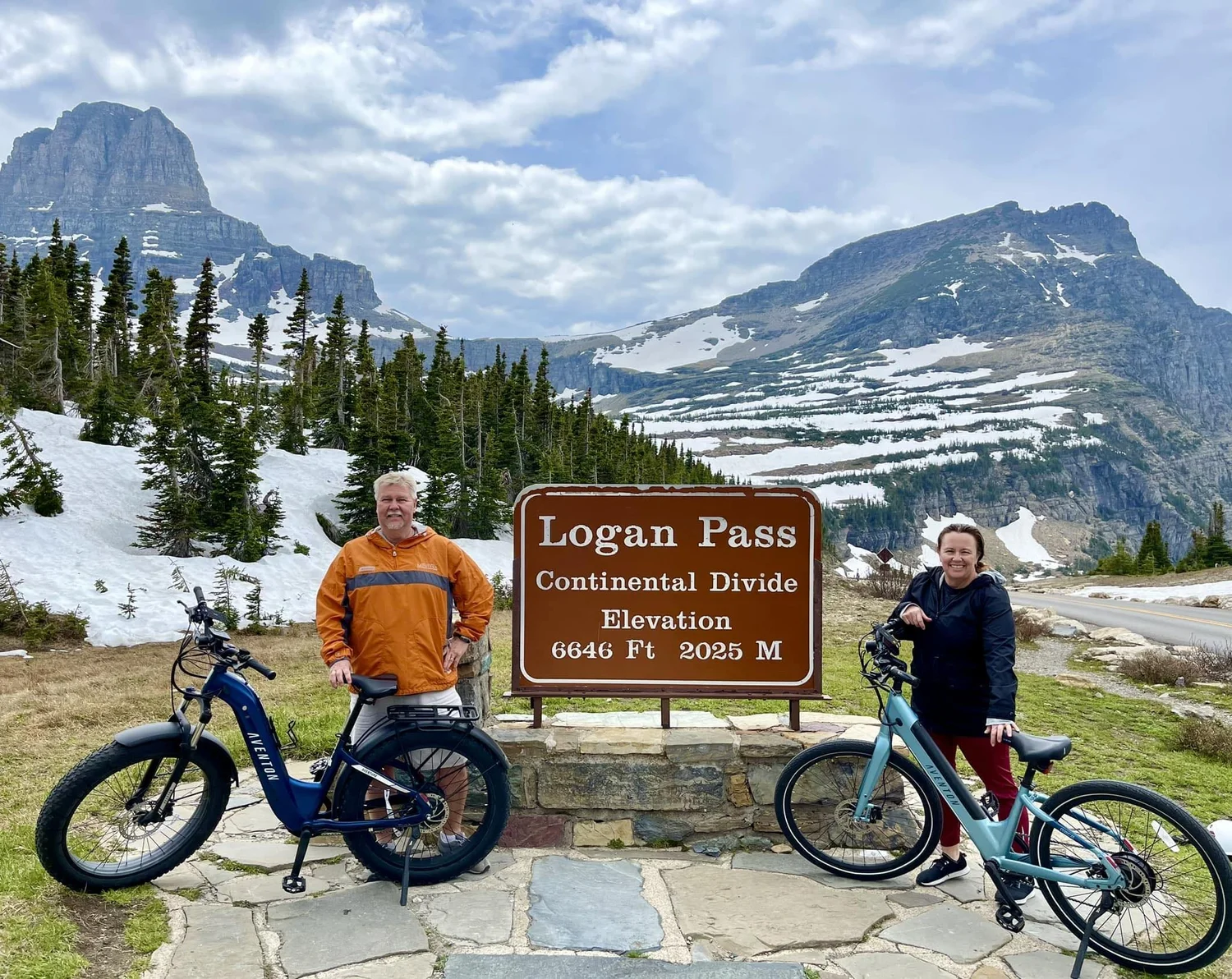
- Mile 32: Logan Pass, 6,646 feet
Parking
Parking is the one part of this ride that can feel challenging, but with a little patience it always works out. Every one of our guests has found a parking spot, even on the busiest days. It may take a few extra minutes of waiting or circling, but you will get parked. Where you park depends on where the park places the seasonal closure:
- If the ride starts at Lake McDonald Lodge: park in one of the lots around the lodge area.
- If the ride starts at Avalanche: park in the Avalanche parking area or in either of the two campgrounds next to Avalanche. During hiker-biker season these campgrounds are closed to camping and open for parking only.
Arrive early. The earlier you arrive, the easier parking becomes. Arriving before 9 AM dramatically increases your chances of a great spot.
Busy parking does not mean a crowded road. Many people drive to the Avalanche area just to hike Trail of the Cedars or the Avalanche Lake Trail, which are extremely popular. Even when the lot looks full, the road itself is quiet and perfect for e-biking.
What to bring
Bear spray (required by us, and it must be accessible), breathable layers, gloves, sunglasses, a rain jacket, a first aid kit, shoes suitable for pedaling, lunch and snacks, plenty of water, and a charged phone or camera. Weather at Logan Pass is often 10 to 20 degrees cooler than the lake, so dress for it. The park adds: most riders get wet from snowmelt and spray on the upper road, downhill speeds cool you fast, and rangers often respond to riders with hypothermia in spring and early summer. Bring warm, dry layers for after the ride.
Restrooms along the route: Apgar Education Center, Lake McDonald boat launch, the Loop and Logan Pass. The park says there are typically no services in spring beyond Apgar Village and West Glacier, so bring enough food and water for the full day.
Entrance fees and vehicle reservations
You must pay the park entrance fee or carry a valid park pass; the park charges a fee for cyclists too. The park required no vehicle reservations in 2026 and sets the rules each year; check the park’s directions page before you go.
Why rent from Montana E-Bikes
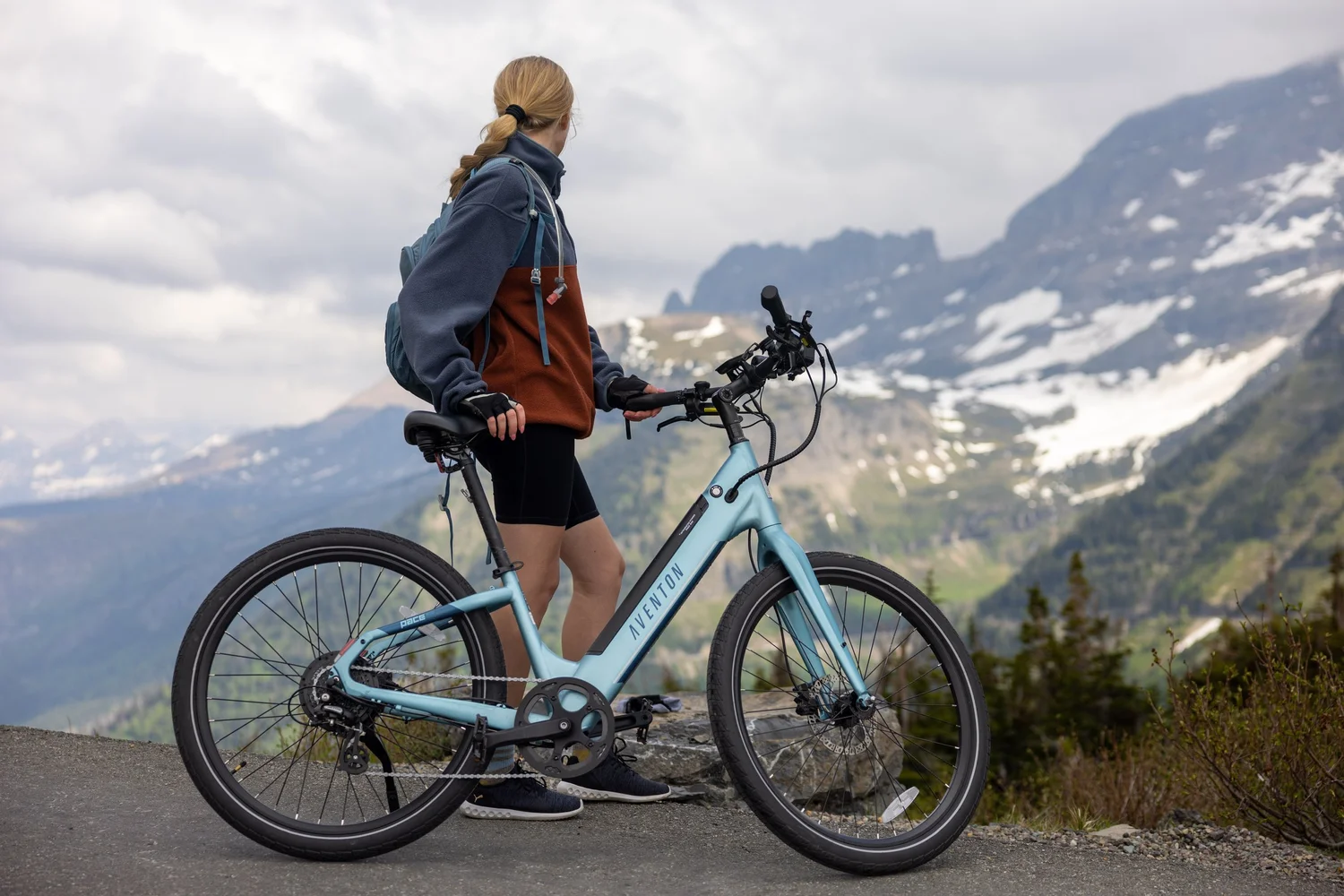
- Brand-new Aventon e-bikes every year. Powerful motors, long-range batteries and several levels of assist make the climb smooth and the day enjoyable. Six models: fat tire, cruiser, folding, cargo and two mountain bikes.
- Reserve now, pay later, cancel anytime. Pay when you pick up your bikes. Cancel at no charge at any time.
- Five-star rated. See what riders say in our Google reviews.
- Getting the bikes to the park. Hitch racks for two e-bikes, truck pads for four, or folding e-bikes that load into a car. See the rental rates.
- App-based navigation. Every rental includes a phone holder and our custom app with turn-by-turn directions.
Ready to ride?
We have helped thousands of riders experience Going-to-the-Sun Road, and we would love to help you too. Reserve your e-bikes online, or call or text us anytime at (406) 200-8495.